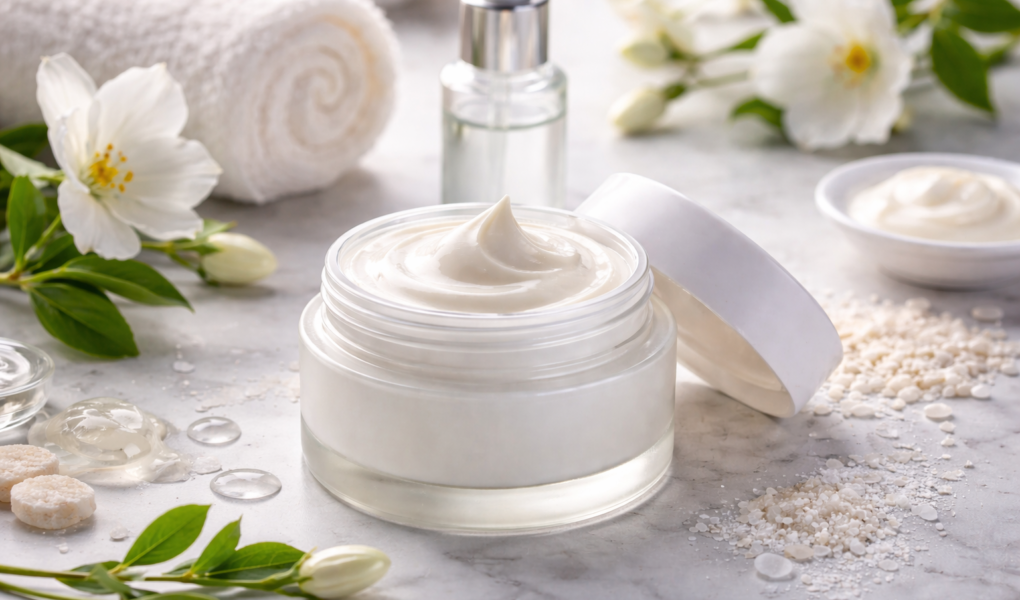
Vanishing cream is a lightweight face cream that “disappears” after you apply it, leaving a smooth, non-greasy finish. The name comes from the way it seems to vanish into the skin rather than sitting on top like a heavy moisturizer. Many people use it as a daytime cream because it feels comfortable, reduces shine, and can make the skin look more even before sunscreen or makeup.
If you’ve ever applied a cream and immediately felt sticky or oily, vanishing cream is basically the opposite experience. It is designed to spread easily, absorb quickly, and leave very little residue. That’s why it has been used for decades as a simple “day cream” and as a base under face powder or makeup.
At the same time, vanishing cream is not a miracle product. It doesn’t replace sunscreen, it won’t treat every skin issue, and it may not be rich enough for very dry skin unless you layer it correctly. This guide explains how vanishing cream works, what to look for, how to use it well, and who it’s best for.
Why It’s Called “vanishing” And What The Finish Feels Like
The “vanishing” effect is mostly about texture and finish. When you rub it in, it initially feels creamy and slightly slippery. Within a short time, it sets down to a dry-touch or soft-matte finish. Instead of staying glossy, it feels like a thin, smooth layer that you barely notice.
That finish can be helpful for people who don’t like shine, especially in warm or humid climates. It can also help makeup apply more evenly because the skin feels smoother and less greasy. Some people describe it as a “clean” finish—like your face is moisturized, but your fingers don’t feel oily afterward.
Different brands can still feel slightly different. Some vanishing creams lean more matte, while others feel a bit more hydrating or “satiny.” The core idea is the same: light hydration with quick absorption and minimal leftover oiliness.
How Vanishing Cream Works On The Skin
Vanishing creams are usually built to deliver moisture without heavy oils. Many formulas are made as a lighter emulsion, often oil-in-water, which means water is the main phase and oils are used in smaller amounts to improve spread and comfort. When you apply the cream, the water phase begins to evaporate and absorb, and the remaining ingredients form a thin film that feels smooth.
This film is part of why it can look and feel like the cream “disappears.” It doesn’t mean the product vanishes completely; it means it doesn’t leave a greasy layer. Instead, it leaves a subtle surface finish that can reduce the look of shine and help skin feel soft.
Another practical point: because vanishing cream sets relatively quickly, it can reduce the chance of makeup sliding around in oily areas. But application technique matters. If you apply too much or layer products too quickly, you can still get pilling or uneven texture.
Common Ingredients You’ll See And What They Do
A classic vanishing cream often relies on fatty acids (like stearic acid) and emulsifiers that help create the cream structure and the characteristic “set” feeling. In older-style formulas, stearic acid plays a major role in thickness and how the cream dries down. Modern products may use different emulsifier systems, but the goal stays the same: light texture, easy spread, and a smooth finish.
Humectants are also common. These are ingredients that help hold water in the skin, like glycerin. They can improve comfort, especially if your skin feels tight after cleansing. A good vanishing cream usually balances that lightweight finish with enough hydration that your skin doesn’t feel dry an hour later.
Many modern vanishing creams also include lightweight emollients or silicones. These ingredients can create a smoother feel and improve the “blurring” look on the surface of the skin. If you’ve ever liked the smoothness of a primer, some vanishing creams can feel similar, though not all of them do.
You may also see fragrance, botanical extracts, or “brightening” ingredients in certain products. These are optional extras. If you have sensitive skin, fragrance and strong plant extracts can sometimes cause irritation. If your skin is very tolerant, you might not notice any issue. The best approach is to choose based on your skin’s history and patch test when trying something new.
Key Benefits Of Vanishing Cream In Daily Skincare
One of the biggest benefits is the lightweight, comfortable feel. For people who dislike heavy moisturizers, vanishing cream can make daily skincare easier to stick with. It can moisturize without making your face look shiny, which is especially useful if you work in a hot environment, wear a mask, or simply prefer a cleaner finish.
Another benefit is how it can work under other products. When applied correctly, it can act like a simple base that helps sunscreen spread smoothly and helps makeup sit better. Many people who use makeup like the way vanishing cream helps reduce excess slip, especially on the T-zone.
Vanishing cream can also be useful for combination skin. If your cheeks need hydration but your forehead becomes oily quickly, a thin layer of vanishing cream can give comfort without pushing the oily areas into overdrive.
Finally, vanishing creams are often straightforward. Many are designed for daily use and have a “no-fuss” feel. For readers who are tired of complicated routines, it can be a practical option.
Who Vanishing Cream Is Best For
Vanishing cream is usually a good match for normal, combination, and oily skin types. If your face often looks shiny by midday, or you hate the feeling of thick products, you may enjoy the dry-touch finish.
It can also suit people who live in humid climates where rich creams feel uncomfortable. In those conditions, even normal skin can prefer a lighter moisturizer during the day.
If you have acne-prone skin, vanishing cream can be a good choice, but it depends on the formula. Some products are very light and work well, while others may include heavier ingredients or fragrance that doesn’t suit you. The key is to patch test and introduce it slowly, especially if you’ve broken out from face creams in the past.
If you have very dry skin, you can still use vanishing cream, but you may need to layer it over a hydrating serum or use a richer moisturizer at night. Think of vanishing cream as a daytime “comfort layer,” not your only source of moisture.
Who Should Be Careful (And When It Might Not Be Enough)
If your skin is extremely dry, flaky, or irritated, vanishing cream alone may feel like it’s not doing much. Some people apply it and feel dry again soon afterward. That doesn’t mean vanishing cream is “bad”—it just means your barrier likely needs more support than a lightweight day cream can provide.
If you have very sensitive skin, be cautious with strongly fragranced vanishing creams. Fragrance isn’t automatically harmful, but it can be a common trigger for irritation, especially if your skin already reacts easily. In that case, a fragrance-free option is often safer.
If you use strong actives (like retinoids or exfoliating acids), your skin may become drier or more reactive. You may find that vanishing cream works better on days when your skin feels calm, and you may prefer a more barrier-focused moisturizer at night.
Also, if you expect vanishing cream to replace sunscreen, it won’t. It can be a base under sunscreen, but it does not provide reliable UV protection unless it is a dedicated sunscreen product with tested SPF and broad-spectrum labeling.
How To Use Vanishing Cream Correctly (Simple Routine Steps)
The easiest way to use vanishing cream is in the morning after cleansing. If your skin feels tight after washing, you can apply a hydrating toner or serum first, then apply vanishing cream while your skin still feels slightly damp. This can help lock in moisture and reduce the chance of dryness.
Use a small amount first—usually a pea-sized amount is enough for the face. Warm it between your fingertips and apply it in a thin, even layer. Pressing it gently into the skin and then smoothing the remainder helps it sit better than aggressive rubbing.
Give it a little time to set before adding sunscreen or makeup. A short wait can reduce pilling and help each layer do its job. If you use sunscreen, apply it as the final skincare step. If you wear makeup, apply it after sunscreen has settled.
If you have combination skin, you can “zone” it. Use a slightly thicker layer on drier areas and a very thin layer on oilier areas like the forehead and nose. That simple adjustment can make a big difference in comfort.
Vanishing Cream Vs Cold Cream Vs Regular Moisturizer
Vanishing cream is designed for a light, quick-setting finish. Cold cream is usually heavier and more occlusive, often used for cleansing, makeup removal, or deep moisturization in dry conditions. Cold cream tends to leave more residue, which can feel comforting for dry skin but too heavy for oily skin.
A regular moisturizer can fall anywhere on the spectrum. Some moisturizers are gel-like and light, similar to vanishing creams. Others are rich and nourishing, closer to cold creams. The difference is that vanishing cream is specifically associated with that “disappearing” feel—lightweight, smooth, and less shiny.
If you’re unsure which is best, use the finish test. If you want your skin to feel soft but not look oily, vanishing cream is often the better match. If you want a protective, comforting layer that stays noticeable, a richer moisturizer or cold cream may suit you better.
Choosing The Best Vanishing Cream For Your Skin
Start with your skin type and your climate. In humid weather, a lighter vanishing cream is often enough. In dry weather, you may need one with stronger humectants or a slightly richer texture.
Then look at your main goal. If your goal is a non-greasy day cream, choose a simple formula without too many extras. If your goal is a smoother makeup base, a vanishing cream with a more “silky” feel may work well. If your goal is comfort for combination skin, choose one that hydrates without leaving shine.
If you’re acne-prone, scan for heavy oils or strong fragrance if you know those trigger you. Not everyone reacts the same way, so it’s smart to introduce a new cream slowly and see how your skin behaves over a week or two.
If you’re sensitive, choose a fragrance-free or low-fragrance option and patch test. Apply a small amount on a discreet area for a few days. If you notice redness, itching, or bumps, it’s better to switch than to force your skin to “get used to it.”
Practical Tips That Make A Real Difference
Apply less than you think you need. One of the most common mistakes is using too much, which can lead to pilling, shine, or a heavy feel. Vanishing cream usually works best in thin layers.
Pay attention to timing when layering. If you apply vanishing cream and immediately rub sunscreen on top, the layers can mix and ball up. Waiting a minute or two often fixes the problem.
Use it strategically. If your face is oily only in the T-zone, you can apply vanishing cream mainly there and use a richer moisturizer on the cheeks. Skincare doesn’t have to be one product applied the same way everywhere.
Finally, listen to seasonal changes. Many people switch textures across the year. Vanishing cream can be perfect in summer and feel insufficient in winter. Adjusting is normal and often leads to better skin comfort.
Conclusion
Vanishing cream is still useful because it solves a simple problem: many people want moisture without grease. It’s a lightweight daytime cream that absorbs quickly, feels comfortable, and can support a smoother look under sunscreen or makeup.
The best results come from choosing the right formula for your skin type and applying it in a thin, even layer with a little time between steps. If you’re oily or combination, vanishing cream can be an easy daily staple. If you’re dry or sensitive, it can still work well with smart layering and a gentle, fragrance-aware choice.
FAQ’s
What Is Vanishing Cream Used For?
Vanishing cream is mainly used as a lightweight moisturizer that absorbs quickly into the skin. It helps keep the skin soft while leaving a smooth, non-greasy finish, which makes it suitable for daytime use and as a base under sunscreen or makeup.
Is Vanishing Cream Good For Oily Skin?
Yes, vanishing cream is often suitable for oily or combination skin because it has a light texture and does not leave a heavy or greasy layer. It can help reduce the appearance of shine while still providing basic hydration.
Can Vanishing Cream Be Used Every Day?
Yes, most people can safely use vanishing cream daily as part of their morning skincare routine. However, it’s important to choose a formula that suits your skin type and to patch test if you have sensitive skin.
Does Vanishing Cream Replace Sunscreen?
No, vanishing cream does not replace sunscreen. It can be used as a moisturizing base before applying sunscreen, but proper sun protection requires a dedicated broad-spectrum sunscreen product.
What Skin Types Benefit The Most From Vanishing Cream?
Vanishing cream works best for normal, oily, and combination skin types. People with very dry skin may still use it, but they often need to apply a hydrating serum or a richer moisturizer underneath for better moisture support.
Want glowing skin and gorgeous hair? Visit our website for the latest beauty tips and expert advice.
Disclaimer
This article is for general information and educational purposes only. It does not replace professional medical or dermatology advice, diagnosis, or treatment. Skincare products—including vanishing cream—can affect people differently depending on skin type, allergies, and existing conditions. Always read the product label, do a patch test before first use, and stop using the product if irritation, redness, or discomfort occurs. If you have sensitive skin, ongoing skin problems, or are using prescription treatments, consult a qualified dermatologist before adding new products to your routine.