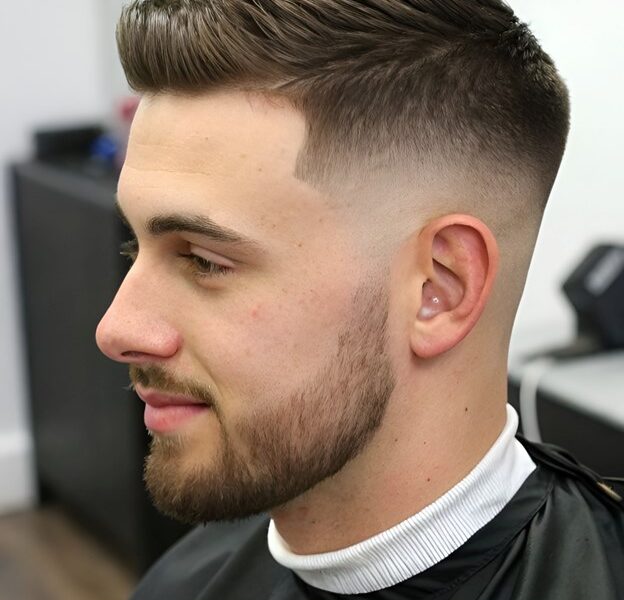
A skin fade haircut is one of the most popular modern men’s haircuts because it looks clean, sharp, and intentionally styled even when the top is kept simple. The “skin” part means the hair gradually blends down until it reaches bare skin at the lowest point, creating a crisp contrast that makes the whole haircut look fresh. You’ll see skin fades paired with everything from a textured crop to curls, a slick back, or even a buzz cut.
If you’ve ever sat in a barber chair and said “give me a fade,” then walked out feeling like the sides were too high, too tight, or not blended smoothly, this guide will help. You’ll learn what a skin fade actually is, the different types, how to choose the right one for your face and hair, how to ask your barber clearly, and how to maintain it so it stays sharp without constant frustration.
What A Skin Fade Haircut Is (and What It Isn’t)
A skin fade is a fade that blends down to skin at the bottom. That means the barber uses a combination of clippers and usually a foil shaver or razor to create a seamless transition from longer hair on the sides into very short hair, then into bare skin. The blend is the main point. A good skin fade doesn’t look like separate “steps” or lines—it should look smooth and gradual when you view it from the side or back.
It’s also important to know what a skin fade is not. It’s not the same as a taper, where the hair gets shorter only around the sideburns and neckline while the sides remain longer. A skin fade is a full fade that can run low, mid, or high on the head, and it’s meant to be visible. It’s also not “just shaving the sides.” If the sides are shaved without a proper gradient, it will look harsh and grow out awkwardly.
Skin Fade Vs Bald Fade Vs Zero Fade: Simple Differences
In everyday conversation, people often use “skin fade” and “bald fade” to mean the same thing. Many barbers do too. Both usually indicate the fade goes down to bare skin, creating that clean finish at the bottom.
A zero fade is slightly different. Instead of going to completely bare skin, the barber ends at a “0” or very close clipper length, leaving a tiny shadow of hair. This can look softer and can be more comfortable if you have sensitive skin or get irritation from shaving.
If you want to avoid confusion, don’t rely on the term alone. Say what finish you want at the bottom: “down to skin” (fully bald) or “down to zero” (a slight shadow). That one sentence prevents most misunderstandings and helps the barber choose the right tools for your scalp.
Low, Mid, And High Skin Fade: Picking The Right Height
The height of the fade changes the entire vibe of the haircut, even if the top stays the same. Choosing the right height is one of the biggest factors in whether you love the result.
A low skin fade starts low, usually just above the ear and around the neckline. It keeps more hair on the sides, so it looks cleaner without feeling extreme. This is a great option if you want a skin fade but still need something that feels balanced for work, or if you’re trying a skin fade for the first time.
A mid skin fade starts around the temple area and creates a noticeable contrast without pushing the fade too high. It’s the most versatile option because it works with many top styles—short crops, medium textured tops, curls, and even longer hair.
A high skin fade starts high on the sides, often above the temple, and delivers the boldest contrast. High skin fades can look very sharp and modern, but they also feel more dramatic and they show grow-out faster. They can look amazing when paired with a strong top shape like a quiff, pompadour, or high texture, but they aren’t always the most forgiving choice if you’re unsure.
A good rule: if you’re undecided, start with a low or mid skin fade. It’s easier to go higher next time than to fix a fade that already feels too high.
Low, Mid, And High Skin Fade: Picking The Right Height
One reason skin fades stay popular is that they work with almost any style on top. The fade controls the sides and makes the haircut look intentional, while the top can be personalized to your hair type and daily routine.
A textured crop with a skin fade is one of the easiest to live with. The top has texture and movement, usually styled forward or slightly messy, and it doesn’t require perfect blow-drying. It’s a good choice if you want a fashionable cut that still feels practical.
A quiff or pompadour with a skin fade gives a classic-but-modern look. The top is styled up and back with volume, and the skin fade makes the silhouette clean and sharp. This style suits people who don’t mind spending a few minutes styling each morning.
A slick back with a skin fade looks polished and structured. It works best when the top has enough length to lay back, and it often looks better with a clean parting or defined shape. If you like a neat style, this pairing is strong.
A curly top with a skin fade is a great way to keep curls controlled without losing personality. The fade removes bulk from the sides, so the curls on top look more defined. The key is keeping the top shaped, not just “long.”
A buzz cut with a skin fade gives a simple, sharp look that’s easy to maintain. It’s clean, minimal, and strong on most head shapes, but because it’s short, the blending has to be very smooth to look professional.
A side part with a skin fade combines a classic shape with a modern finish. It’s a great choice for a clean “business casual” haircut that still looks current.
Who A Skin Fade Haircut Suits: Face Shape And Head Shape Tips
A skin fade can suit most people, but the best version depends on your face shape, head shape, and how you like your hair to sit.
If you have a rounder face, a mid or high skin fade with more height or texture on top can help elongate your look. Too low of a fade combined with a flat top can sometimes make the face appear wider.
If you have an oval face, you’re in a flexible category. Most fade heights work, so you can focus on what suits your style and maintenance preference.
If you have a square face, skin fades look especially sharp because the clean sides highlight strong angles. Low and mid fades are usually flattering, and a defined top shape can look very balanced.
If you have a longer face, be careful with very high fades paired with very tall tops, because it can make the face look even longer. A low or mid skin fade with moderate height on top often looks more proportional.
Head shape matters too. Skin fades reveal more of the head than longer sides do. If you have bumps, dents, or areas you prefer not to highlight, a zero fade or a low fade can give a similar clean feel with slightly softer exposure.
How To Ask Your Barber For A Skin Fade Haircut (so You Get Exactly What You Want)
The easiest way to get the right skin fade is to be specific about four things: fade height, bottom finish, top length/style, and detailing.
First, tell your barber the height: “low,” “mid,” or “high.” If you aren’t sure, say you want it “low to mid” and ask what they recommend for your head shape.
Second, clarify the finish: “down to skin” if you want it fully bald at the bottom, or “down to zero” if you want a slight shadow.
Third, describe the top. Don’t just say “keep the top.” Say how you wear it. For example: “Keep about two inches on top and add texture,” or “Leave enough length to style it back,” or “Keep it short and easy with a crop.”
Fourth, mention details: Do you want the neckline natural or squared? Do you want the sideburns tapered or sharp? Do you want a hard part line or no line? These small choices affect whether the haircut looks classic, modern, or very bold.
If you can, show one reference photo that matches your hair type. Photos help, but don’t rely on them alone. A picture of a thick-haired model won’t look identical on thin hair, so use the photo to communicate the shape rather than expecting an exact copy.
Quick Barber Script (use This Word-for-word)
“Can I get a mid skin fade, blended smooth down to skin, and keep the top medium length with texture so I can style it easily? Natural neckline, clean edges.”
You can swap “mid” for “low” or “high,” and swap “texture” for “slick back,” “crop,” or “curly top.” This script keeps things clear and avoids misunderstandings.
How Often You Need A Haircut (maintenance And Grow-out Reality)
Skin fades look amazing when fresh, but they also show growth faster than softer fades because the contrast at the bottom is strong. For most people, the sharp look lasts about 7 to 14 days before it starts looking less crisp around the edges. If you love the “fresh fade” look, plan for a barber visit every one to two weeks.
If you want a skin fade but don’t want to visit the barber that often, choose a low skin fade or consider a zero fade. Both tend to grow out a bit more naturally and won’t look “unfinished” as quickly.
A practical approach is to get a full haircut every 2–3 weeks and do small cleanups in between, like tidying the neckline or trimming around the ears. But be careful: at-home cleanup can easily create uneven lines if you aren’t experienced. If you try it, use good lighting, go slow, and avoid pushing the fade line higher.
Styling A Skin Fade At Home: Easy Daily Routine And Product Tips
A skin fade doesn’t require heavy styling on the sides, but the top usually benefits from a simple routine so the haircut looks complete.
If you like a natural, modern finish, a small amount of matte clay or paste works well. Warm it in your hands and apply it lightly, focusing on the top and front. For texture, use your fingers instead of a comb.
If you prefer a neat style like a side part or slick back, a cream or light pomade can give control without making the hair look greasy. If you do choose a stronger pomade, use less than you think you need—too much product can make the top look heavy and distract from the clean fade.
A fast routine that works for most people is: towel-dry hair, blow-dry for 30–60 seconds in the direction you want it to sit, then apply a small amount of product. Even minimal blow-drying can improve shape and help the style last longer.
If you live in a humid area or sweat a lot, keep the top lighter and more textured. Heavy slicked styles can collapse faster in humidity. A textured finish often looks better throughout the day because it still looks intentional when it loosens slightly.
Scalp And Skin Care After A Skin Fade (avoid Irritation And Bumps)
Because skin fades often involve shaving down to bare skin, some people experience irritation, especially on the first day or two. If you’re prone to razor bumps, dryness, or sensitivity, tell your barber before they start. They may use different tools, adjust pressure, or recommend a zero fade finish.
After the cut, keep it simple. Wash gently, avoid harsh scrubs on the freshly shaved area, and use a light moisturizer if your scalp feels dry. If you’re outdoors, remember that a skin fade exposes more skin to the sun, especially around the sides and back, so sun protection matters more than people realize.
If irritation is a repeated issue, one of the best fixes is choosing a fade that ends at zero rather than fully to skin. You still get the clean fade look, but with less direct shaving on the scalp.
Common Mistakes People Make With Skin Fades (and How To Avoid Them)
One common mistake is asking for a fade without specifying height. You might picture a low fade, but the barber might default to mid or high. Always say low, mid, or high.
Another mistake is not explaining your lifestyle. If you wear hats often, go to the gym daily, or don’t use styling product, say so. Your barber can adjust the top length and texture to match how you actually live.
People also underestimate how sharp a high skin fade can look. If you’re new to fades, start lower. A low skin fade still looks clean and modern, but it’s easier to wear and grows out more smoothly.
Finally, don’t try to “fix” the fade line at home unless you know what you’re doing. Small mistakes can push the fade higher and create uneven patches that are hard to correct without a full haircut.
Conclusion
A skin fade haircut is a clean, sharp style that works with almost any look on top, from textured crops to curls, slick backs, and buzz cuts. The secret to getting a skin fade you love is being specific: choose the fade height (low, mid, high), clarify whether you want it down to skin or down to zero, and describe how you actually want the top to look and feel.
If you keep maintenance realistic and use a simple styling routine, a skin fade can be one of the easiest ways to look well-groomed and modern without overcomplicating your daily routine. When in doubt, start with a low or mid skin fade, take a reference photo, and communicate clearly—your barber can handle the rest.
FAQ’s
What Is A Skin Fade Haircut?
A skin fade haircut is a style where the hair on the sides and back gradually blends down to bare skin at the bottom, creating a clean and sharp contrast with the longer hair on top.
How Long Does A Skin Fade Haircut Last?
A skin fade usually looks fresh for about 1 to 2 weeks. After that, hair growth becomes noticeable, especially around the edges, and many people choose to get a touch-up.
What Is The Difference Between A Skin Fade And A Taper?
A skin fade blends the hair down to the skin across the sides and back, while a taper only shortens the hair slightly around the neckline and sideburns without fully fading the sides.
Is A Skin Fade Haircut Suitable For Curly Hair?
Yes, a skin fade works very well with curly hair. It removes bulk from the sides and helps define the curls on top, making the hairstyle look more balanced and neat.
How Do I Ask My Barber For A Skin Fade Haircut?
Tell your barber the fade height (low, mid, or high), confirm you want it down to skin, and clearly explain how you want the top styled, such as textured, slicked back, or kept short.
Want glowing skin and gorgeous hair? Visit our website for the latest beauty tips and expert advice.
Disclaimer
This article is for general informational purposes only. The advice shared about the skin fade haircut is based on common barbering practices and grooming experience, but results may vary depending on individual hair type, scalp condition, and personal preferences. For the best outcome, consult a professional barber or stylist who can assess your specific needs. We are not responsible for any dissatisfaction or issues resulting from personal grooming decisions made after reading this content.