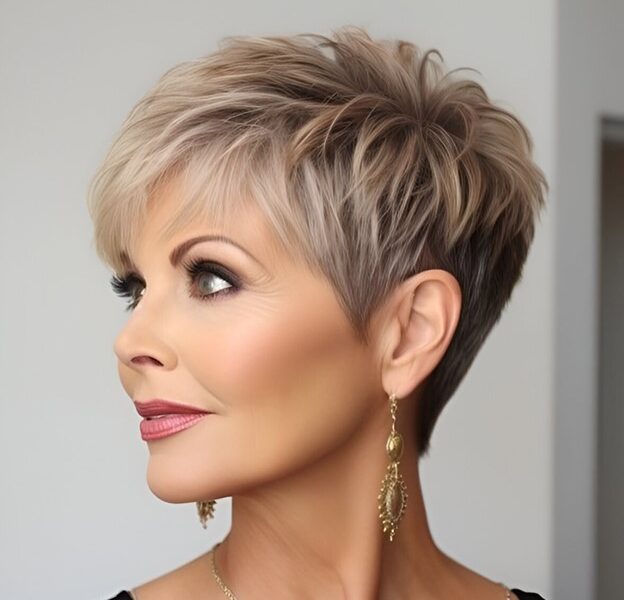
Short pixie cuts for older women have become one of the most requested hairstyles in salons over the last decade. Many women choose this style because it feels fresh, practical, and flattering at the same time. A well-cut pixie can highlight the eyes, lift the cheekbones, and bring attention to a confident smile. It also removes the daily stress of managing long or heavy hair.
As hair naturally changes with age, it may become finer, drier, or thinner. A thoughtfully shaped pixie works with these changes instead of fighting them. When done correctly, this haircut creates the illusion of volume, softness, and structure. That is why so many stylists recommend short pixie cuts for older women who want a modern look without high maintenance.
Why Short Pixie Cuts Work So Well After 50 And 60
One of the main reasons this haircut works beautifully on mature women is balance. As facial features soften over time, a pixie cut adds gentle definition around the face. The shorter length can visually lift sagging areas and draw attention upward, especially when paired with light layering on top.
Another important factor is manageability. Many older women prefer a hairstyle that saves time in the morning. A pixie cut usually requires only a small amount of product and minimal styling tools. This simplicity makes it practical for busy routines, travel, or warmer climates.
Short hair can also appear healthier. When damaged or dry ends are removed, the hair often looks thicker and more vibrant. For women experiencing thinning hair, a pixie cut can reduce the contrast between scalp and strands, helping hair look fuller.
Popular Types Of Short Pixie Cuts For Older Women
There is no single version of the pixie cut. The beauty of this style is its versatility. A classic pixie with side-swept bangs remains one of the most flattering choices. The angled fringe softens forehead lines and frames the eyes naturally. This version suits many face shapes and feels timeless rather than trendy.
A textured pixie is another excellent option. Light, choppy layers create movement and volume at the crown. This style works especially well for fine hair because texture gives the appearance of thickness. A small amount of styling cream can enhance the layers without making the hair stiff.
For women with natural curls or waves, a curly pixie can look playful and elegant. Instead of straightening the hair, embracing natural texture adds character. Keeping the sides slightly shorter and leaving length on top allows curls to form shape without overwhelming the face.
An asymmetrical pixie offers a more modern feel. One side may be slightly longer, creating a soft diagonal line. This subtle imbalance can slim round faces and add interest without looking extreme. It is a great choice for women who want something fresh but still age-appropriate.
For those who prefer very low maintenance, an ultra-short pixie or cropped style may be ideal. This cut keeps the hair close to the head while maintaining gentle shaping around the hairline. It is simple, bold, and surprisingly elegant when tailored to the individual.
Choosing The Right Pixie For Your Face Shape
Face shape plays a key role in finding the most flattering pixie cut. While personal preference matters most, small adjustments can make a significant difference.
Women with round faces often benefit from height at the crown. A slightly longer top section elongates the face and prevents the style from looking too flat. Side-swept bangs also help break up roundness and add definition.
Oval faces are generally balanced and can wear most pixie variations successfully. Whether textured, sleek, or layered, the key is maintaining proportion so the cut does not hide natural symmetry.
For square faces, softer layers and feathered edges work best. These details reduce sharpness along the jawline and create a more blended look. Avoiding very blunt lines can keep the overall effect gentle.
Heart-shaped faces usually look great with a bit of volume near the jawline or longer bangs. This balances a wider forehead and narrower chin. A skilled stylist can adjust the length and layering to suit each individual feature.
Hair Texture And Thickness Considerations
Hair texture changes with age, so understanding your current hair type is essential before choosing a pixie. Fine hair benefits from light layering rather than heavy thinning. Too much texturizing can make thin hair look sparse. Instead, subtle layers add body while keeping density.
Thick hair requires a different approach. Strategic thinning and layering remove bulk and allow the hair to sit neatly. Without this step, thick hair may puff out, especially in humid weather. A professional stylist will shape the cut so it follows the natural head contour.
For coarse or curly hair, moisture is important. A pixie cut can look stunning on textured hair, but it needs proper conditioning. Keeping curls hydrated prevents frizz and maintains definition. A leave-in conditioner or curl cream can make daily styling easier.
Styling And Daily Maintenance
One of the strongest advantages of short pixie cuts for older women is ease of styling. Most days, a small amount of product is enough. A lightweight mousse can add lift, while a smoothing cream can control flyaways. The goal is movement, not stiffness.
Blow-drying with a small round brush at the crown can create extra volume in just a few minutes. However, many women find they can simply air-dry and use their fingers to shape the hair. This flexibility makes the pixie ideal for active lifestyles.
Regular trims are important. Because the hair is short, the shape can lose definition after four to six weeks. Scheduling consistent appointments keeps the cut looking intentional rather than grown out. Maintenance is simple but should not be ignored.
Color Ideas That Enhance A Pixie Cut
Hair color plays a big role in how a pixie cut appears. Natural gray or silver hair can look striking in a short style because the texture becomes more visible. A pixie allows silver tones to shine without appearing dull.
Subtle highlights can add dimension. Even a few lighter strands around the face can brighten the complexion. This technique works especially well for women with fine hair, as it creates depth and the illusion of thickness.
For those who prefer warmer tones, soft browns, honey shades, or gentle auburn hues can complement mature skin beautifully. The key is choosing shades that enhance natural undertones rather than overpower them. A professional colorist can help select the most flattering option.
Confidence And Personal Expression
Hair is closely connected to identity. Many women feel a sense of renewal after choosing a pixie cut. Letting go of long hair can symbolize confidence and independence. Rather than hiding behind layers, the face becomes the focus.
Short pixie cuts for older women are not about following trends. They are about embracing comfort and authenticity. A well-shaped pixie shows that style does not have an age limit. In fact, it often highlights maturity and self-assurance.
Trying a new haircut can feel intimidating, but consultation with a skilled stylist makes the process smoother. Bringing reference photos and discussing lifestyle needs ensures the final result matches expectations.
Common Concerns About Going Short
Some women worry that short hair will make them look older. In reality, the opposite is often true when the cut is tailored correctly. Removing heavy, outdated styles can create a fresher appearance.
Another concern is limited styling options. While short hair may seem less versatile, small changes in texture, parting, or accessories can create different looks. A simple headband, subtle clip, or change in fringe direction can transform the style.
There is also fear of regret. A practical way to ease this worry is to start with a slightly longer pixie before going very short. This gradual change allows adjustment while still enjoying the benefits of shorter hair.
Conclusion
Short pixie cuts for older women offer a practical, stylish, and confidence-boosting solution for changing hair needs. They enhance facial features, simplify daily routines, and adapt beautifully to different textures and face shapes. With the right cut, color, and maintenance routine, a pixie can look elegant and modern at any age.
Choosing this hairstyle is not about following fashion trends. It is about finding a look that feels authentic and manageable. When carefully customized, a pixie cut can bring out natural beauty and help women feel comfortable, polished, and empowered every day.
FAQ’s
Are Short Pixie Cuts Good For Older Women With Thin Hair?
Yes, short pixie cuts can make thin hair look fuller when layered properly. Light texture at the crown adds volume and reduces the appearance of thinning areas.
How Often Should I Trim A Pixie Cut?
Most pixie cuts need trimming every 4 to 6 weeks to maintain their shape and keep the style looking neat and intentional.
Do Pixie Cuts Make Older Women Look Younger?
A well-shaped pixie can create a fresh and lifted appearance. By framing the face and highlighting features, it often gives a more vibrant look.
Is A Pixie Cut Easy To Style Daily?
Yes, pixie cuts are low-maintenance. Usually, a small amount of styling product and a few minutes of shaping with fingers or a blow dryer is enough.
Can Women Over 60 Wear Short Pixie Cuts Confidently?
Absolutely. Short pixie cuts are timeless and can be customized to suit any age, face shape, or hair texture, making them a confident and elegant choice.
Want glowing skin and gorgeous hair? Visit our website for the latest beauty tips and expert advice.
Disclaimer
This article is for informational purposes only. The suggestions about short pixie cuts for older women are based on general hairstyling knowledge and current trends. Individual results may vary depending on hair type, face shape, and personal preferences. Before making any major haircut or color change, it is recommended to consult a professional hairstylist who can assess your specific needs and provide personalized advice.